
Resorts in Suriname: How to Choose and Book the Right Stay
Suriname offers far more than city hotels. We can sleep beside a river, stay near rainforest trails, book a lodge reached by boat, or choose a comfortable resort close to Paramaribo.
The right choice depends on how much time we have, how remote we want to go, and what comfort level we expect. Transport can be limited outside the capital, so it pays to compare the full package before we send a deposit.
A little planning helps us spend less time sorting out transfers and more time enjoying Suriname’s forests, rivers, food, and culture.
Overview
What Kind of Resort Stay Can We Find in Suriname?
Resorts in Suriname range from poolside properties near Paramaribo to small jungle lodges deep in the interior. The word “resort” can mean different things here. Some places have restaurants, pools, air-conditioned rooms, and organized activities. Others are simple nature stays where meals, boat transport, and guided trips come as one package.
For a short break, we may want easy road access and a private room with familiar comforts. For a longer trip, a rainforest lodge can give us a closer look at riverside life, birds, monkeys, and forest trails.
The trade-off is straightforward. Remote resorts usually offer more nature and fewer crowds, yet they may have limited Wi-Fi, basic bathrooms, and fixed transport times. Properties near Paramaribo are easier to reach, although they don’t offer the same feeling of being surrounded by rainforest.
Jungle Lodges and River Resorts for Nature and Adventure
Jungle lodges often sit along the Suriname River or farther inland, where roads end and boats take over. Danpaati River Lodge and Awarradam Jungle Lodge are well-known examples of stays built around river travel and guided experiences in the interior.
A journey to these areas can take much of a day. We may travel by road first, then continue by dugout canoe or motorized boat. That transfer is part of the experience, but it also means we should avoid booking a remote lodge for a single overnight stay.
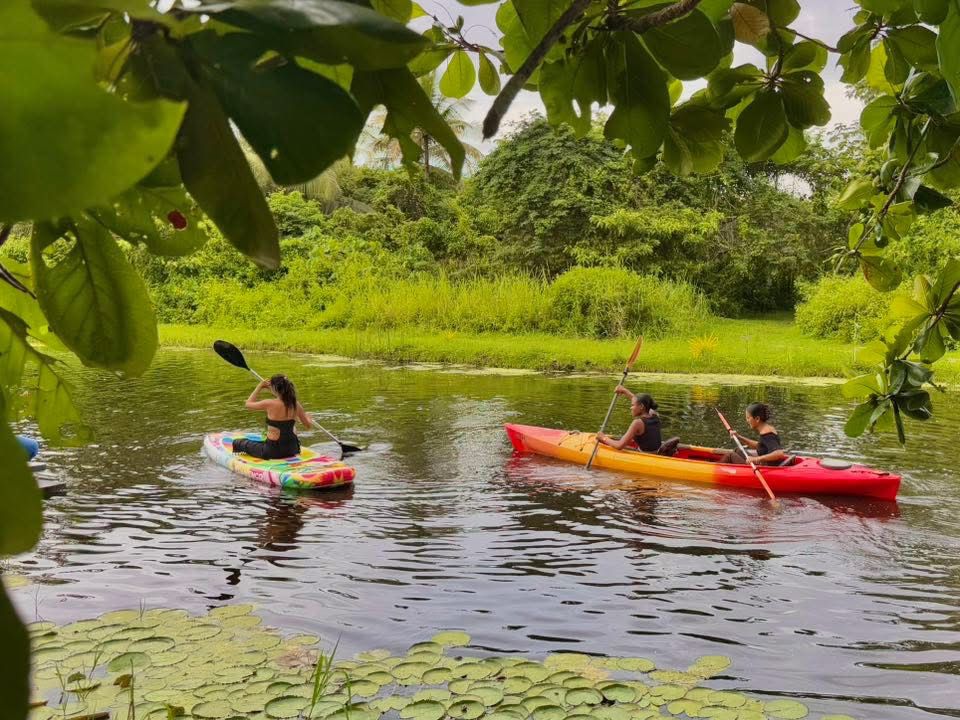
Many packages include meals, guides, excursions, and transfers from Paramaribo. Activities may include wildlife walks, fishing, kayaking, swimming, village visits, or evening boat rides. Each lodge has its own schedule, so we should ask which activities run on our travel dates.
Before booking, we should confirm a few basic details:
- Whether rooms have private bathrooms, fans, air conditioning, or hot water
- How long electricity runs each day and whether Wi-Fi is available
- Whether mosquito nets, repellent, and rain gear are provided
- What happens if rain or river conditions delay a transfer
In the interior, comfort often means a clean room, good food, a capable guide, and reliable transport, not luxury amenities around the clock.
Suriname’s climate is warm and humid year-round. Heavy rain can affect dirt roads and river travel, particularly during wetter months. Flexible plans make these trips much easier.
Relaxing Resorts Near Paramaribo and the Coast
Resorts near Paramaribo suit travelers who want a quieter base without committing to a long interior transfer. These stays can work well for families, couples, groups, and visitors who want a pool, restaurant access, and room to unwind after sightseeing.
Afobaka Resort is one option on the Suriname River, southwest of Paramaribo. It offers a more accessible nature setting than an interior lodge, while still placing us near forested river scenery. Overbridge River Resort is another popular choice for a relaxed riverside day or overnight stay.
Location changes the rhythm of the trip. A property near the capital makes it easier to explore the historic center, visit markets, arrange airport pickup, or join day tours. Paramaribo’s historic inner city is a UNESCO World Heritage Site, and staying within reach gives us time to see its wooden colonial buildings, religious sites, and waterfront streets.
Coastal and riverside resorts also work well when we want nature without giving up easy transport. Still, we should check the actual driving time, not only the map distance. Traffic, road conditions, and ferry schedules can stretch a short-looking route.

How Do We Choose the Best Resort in Suriname?
The best resort is the one that fits our actual trip, not the one with the highest nightly rate or most polished photos. A two-night interior package may be a poor fit if our flight leaves early the next morning. On the other hand, a riverside property can feel too close to the city if rainforest immersion is our main goal.
We should first decide what matters most: wildlife, privacy, a pool, cultural activities, easy airport access, or a guided multi-day trip. Then we can compare properties on those points instead of comparing prices alone.
Match the Location to Our Travel Plans
Staying in Paramaribo keeps us close to restaurants, museums, tour departures, and the main international airport. It makes sense when we have a short visit or several day trips planned.
An inland lodge needs more time. We should allow a travel day on both ends, especially when the lodge requires a road-and-boat transfer. If we have a week or longer, an interior stay can become the highlight of the trip. With only three or four nights in Suriname, a resort near Paramaribo may be more practical.
Riverside properties offer a middle ground. We can experience forest and water without long-distance travel. This setup works well when we want a calm overnight stay before or after time in the capital.
We should avoid placing a faraway resort at the end of a tight itinerary. A delayed boat, wet road, or late transfer can create unnecessary stress before an international flight.
Check What the Rate Really Includes
A room rate can look affordable until meals, transport, taxes, and excursions appear as separate charges. This matters most at remote lodges, where we may not have other restaurants or transport options nearby.
Before comparing two resorts, we should ask for an itemized total in writing.
| Item to confirm | Why it matters |
|---|---|
| Room type and occupancy | Prices may be per person, per room, or based on double occupancy |
| Meals and drinks | Remote properties may include meals but charge separately for alcohol |
| Transfers | Boat and road transfers can be a major part of the total |
| Tours and entrance fees | Some packages include activities, while others price them separately |
| Taxes and service charges | The quoted rate may not be the final amount |
| Wi-Fi and facilities | Internet, pool use, or equipment rental may have limits or added fees |
The key detail is whether the price is per person or per room. We should also ask which currency applies and whether card payments are accepted. Some smaller properties may request a bank transfer, cash payment, or deposit before arrival.
Read Recent Reviews With the Right Questions in Mind
Star ratings help, but written reviews tell us more. We should look for comments from the last few months, especially if a resort is remote or relies on transfers.
Cleanliness, food quality, staff helpfulness, room condition, and transport reliability matter more than a generic five-star review. Guest photos can also show whether a room, dock, pool, or trail matches current expectations.
When reviews mention poor Wi-Fi, insects, rain, or simple facilities, we should read the context. Those factors are normal at many rainforest stays. A concern becomes more serious when guests repeatedly describe broken transfers, unclear billing, unsafe boats, or staff who don’t respond to problems.
If one feature matters to us, we should ask directly. For example, families may need to confirm pool depth and child-friendly meals. Travelers with mobility needs should ask about stairs, dock access, paths, and boat boarding.

How to Book a Resort in Suriname Without Surprises
We can book directly with the resort, through an online platform, or as part of a tour package. Each option works, but the lowest nightly price doesn’t always produce the lowest total trip cost.
Direct booking gives us the best chance to ask detailed questions. An online platform makes it easier to compare dates and room types. A tour package can simplify an interior trip because it may combine the lodge, meals, guide, transfers, and activities.
Compare Direct Bookings, Booking Sites, and Tour Packages
A direct reservation often works best for small resorts and lodges. We can confirm dietary needs, airport pickup, room preferences, and transfer timing before we pay. It may also be easier to arrange a custom stay if we are traveling as a family or group.
Booking sites are useful for comparing rates and reading recent reviews. However, we should still contact the property if the listing doesn’t clearly explain transport, meals, or taxes. A booking confirmation for a room doesn’t always include the boat ride needed to reach it.
Tour packages make sense for interior destinations. A reputable local operator can coordinate transport from Paramaribo, guide services, meals, and activities under one itinerary. We should compare the full package price, including every required transfer, before deciding which option costs less.
Confirm Availability, Transfers, and Payment Before Paying
A clear booking message prevents most misunderstandings. We should request written confirmation by email or message before sending a deposit.
Our message should include:
- Travel dates, guest count, room needs, and arrival time
- Dietary restrictions, allergies, mobility needs, and special requests
- Pickup point, transfer departure time, luggage limits, and return schedule
- Total price, currency, deposit amount, balance due date, and payment method
- Cancellation terms, refund policy, and what happens if weather delays travel
We should keep every receipt, payment record, booking code, and written message. If we pay by bank transfer, we should send the confirmation and ask the resort to acknowledge receipt.
Cancellation policies vary widely. Some lodges hold a deposit for a future stay, while others charge a fee or keep the full payment close to arrival. We should know the policy before money changes hands.


What Should We Know Before Arriving at a Suriname Resort?
Packing for Suriname depends on the resort location. A city-adjacent stay needs little more than normal tropical travel basics. For a boat-access lodge, light luggage is easier to carry and safer to load.
Breathable clothes, a rain jacket, insect repellent, sunscreen, sturdy walking shoes, a reusable water bottle, and personal medications belong in our bag. We should also bring a small amount of cash for drinks, tips, souvenirs, or purchases in places where card machines aren’t available.
Plan Around Transport, Connectivity, and Local Conditions
Remote resorts may have fixed pickup times, limited cell coverage, and internet that works only at certain hours. Before departure, we should save the property’s phone number, transfer contact, and meeting point offline.
We also need to ask about luggage limits for boat travel. A large hard-sided suitcase can be awkward on a small vessel, especially during rain. A soft duffel or backpack is often easier.
Flights, rain, road conditions, and river levels can affect schedules. We should tell the resort as soon as possible if our flight arrives late. Likewise, we should ask what the backup plan is if a transfer changes.
Respect Nature and Local Communities During Our Stay
Suriname’s forests and rivers are part of daily life for many communities. We should follow our guide’s directions, stay on marked trails, and keep a respectful distance from wildlife.
Reusable bottles and refillable toiletry containers reduce plastic waste. We should take trash back with us when bins aren’t available, especially during river excursions.
When visiting villages or photographing people, we should ask first. Respectful behavior creates better interactions and helps protect the places we came to see.
Plan a Resort Stay That Fits the Trip
A good Suriname resort stay starts with the setting we want and the time we can realistically give it. We should compare full package costs, confirm transport, and read the cancellation terms before paying.
Once we have shortlisted two or three properties, we can ask focused questions and book only after receiving written details. That preparation leaves us free to enjoy Suriname’s natural beauty without avoidable surprises.