
Avond Vierdaagse in Suriname (March/April): Our Feel-Good “Carnaval” on Foot
When we think of Carnaval, our minds jump to feathers, floats, and loud street parades in places like Brazil and parts of the Caribbean. Suriname doesn’t really do Carnaval in that exact style, and that’s part of what makes traveling here fun. We get our own kind of street energy, just with a different heartbeat.
In March or April, often around the Easter period, Paramaribo shifts into a big, friendly routine called Avond Vierdaagse (usually shortened to AVD). It’s a four-evening walking event with organized routes, groups in matching shirts, music popping up along the way, and food stands that feel impossible to ignore.
AVD isn’t a classic Carnaval parade, and it’s not meant to be. Still, on certain nights (especially the finish), it can feel like a street festival that pulls everyone outside at once.
Overview
What Avond Vierdaagse is, and why people compare it to Carnaval
Avond Vierdaagse in Suriname is simple to explain: we meet up in the evening, then walk a set distance for four nights in a row. The routes are planned, the walking is organized, and most participants stick with their group from start to finish.
So why do people call it “Suriname’s version of Carnaval”? It’s not because it has floats or a costume parade. It’s because of the shared mood. The streets fill up, spectators line parts of the route, groups show up with team pride, and the city feels louder and warmer than on a normal weeknight.
We’ll see a mix of:
- School groups (often the loudest, in the best way)
- Families walking together at an easy pace
- Sports clubs and friend groups
- Companies and work teams doing it as a social thing
Even if we don’t join, it’s still a strong cultural moment. For many locals, AVD is one of those yearly events that says, “We’re here, together, and we’re going to enjoy the week.”
A quick origin story: from Dutch walking marches to a Suriname tradition
The idea comes from the Netherlands, where long-distance walking events became popular in the early 1900s. Over time, “evening four-day walks” (avondvierdaagse) took off as community events.
Suriname adopted the tradition and made it our own. Today, the Paramaribo edition is widely associated with the Easter holiday period. If we want a quick official-style overview from the organizer side, we can check the Dutch-language AVD site on 4daagseparamaribo.nl.
Carnaval vs Avond Vierdaagse: what’s the same, what’s different
Here’s the easiest way to compare them without forcing the comparison:
- Main focus
- AVD: walking set distances, finishing all four nights
- Carnaval: parade culture, dancing, costumes, floats
- Structure
- AVD: organized routes, group starts, a clear finish
- Carnaval: freer flow, more performance-based street movement
- Energy
- AVD: community pride, music from the sidelines, big final-night excitement
- Carnaval: nonstop party vibe, often louder and wilder by design
- What looks festive
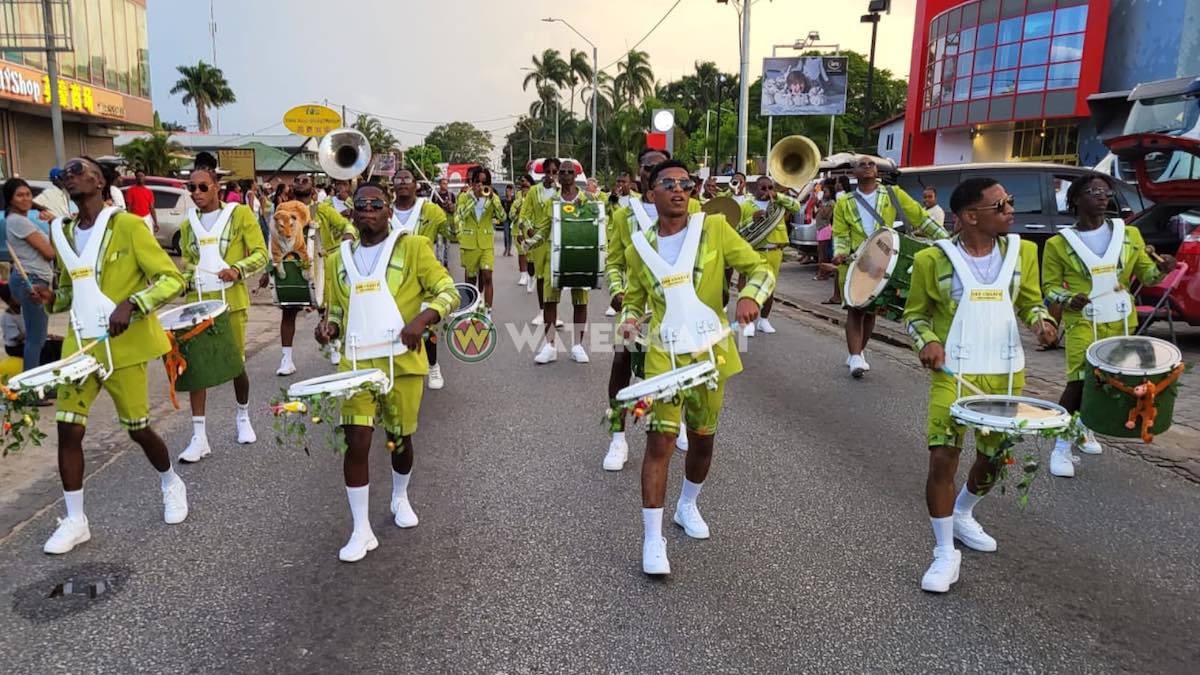
- AVD: matching shirts, flags, drums from supporters, themed group style
- Carnaval: full costume focus and parade visuals
If we come expecting Rio, we’ll miss the point. If we come expecting a joyful city tradition that feels like a moving block party, AVD delivers.

What happens during the four nights (routes, distances, and the big finish)
Each evening follows a familiar rhythm. People gather, find their group, and settle into the pace. The start feels busy but calm, like the moment before a concert when everyone’s still buying snacks and checking who’s here.
Distances can vary by year, but common options are often 5 km, 10 km, and 15 km, and many walkers choose one distance and stick with it all four evenings. Some treat it like light fitness, others treat it like a social promise, “We’re doing all four nights together.”
As we walk, the mood changes by neighborhood and by crowd density. Some stretches feel quiet and focused. Other parts get noisy, with spectators, small music setups, and people calling out to friends in passing groups.
The final night is where it peaks. The finish turns into a celebration, with more people watching, more photos, and that sense that the whole city showed up for the same reason.
Who should join, and how it feels for first-timers
If we like walking and we like people, joining AVD can be a great travel experience. We don’t need to be an athlete. For many groups, the pace is relaxed and chatty, with plenty of short stops.
If we’re not into walking four nights straight, watching is still worth it. We can pick one evening, stand near a lively section, and soak up the atmosphere without committing to sore calves.
For first-timers, the best mindset is simple: it’s more about togetherness than speed. Finishing with our group feels like arriving at a party where we already know the theme.
Where the party feeling shows up most: spectators, music, and group style
The street-party side of AVD is mostly on the sidelines. People cheer, clap, and call out group names. Some spectators bring drums. We’ll also spot groups that plan their look, matching shirts, school colors, flags, sometimes a playful theme.
It’s not an official costume parade, so we shouldn’t expect choreographed floats. But the final evening can still be prime time for people-watching and photos, especially near the finish when emotions run high and everyone’s tired but happy.

Food is half the fun: what we eat and drink during Avond Vierdaagse
If we remember one thing about AVD as travelers, it might be the food. Busy points along the route tend to attract grills, snack stands, and cool drinks. It’s the kind of event where “We’ll eat after the walk” turns into “Let’s just grab something now.”
We’ll usually find:
- Quick fried snacks that are easy to eat standing up
- Grilled items that smell good from far away
- Simple rice or noodle plates for a heavier meal
- Sweet drinks and cold options that make humid evenings easier
A good approach is to bring small cash, eat a little earlier to avoid the longest lines, and try one savory thing plus one sweet thing. If we don’t handle spice well, we can ask for it mild, or pick grilled foods with simpler sauces.
For a local perspective on why people call AVD “Surinamese Carnaval,” Pejego Tours’ blog post captures the vibe nicely.
What to try first if we only eat a few things
We don’t need a huge food mission to enjoy AVD. If we only try a couple of items, this simple plan works well:
- Fried snacks: great for sharing, easy to sample
- Grilled skewers or grilled chicken: usually a safe pick for picky eaters
- Rice or noodle plates: filling, familiar texture if we want “real dinner”
- Local sweets: fun payoff at the end of the night
Bring water. The evenings can still feel warm and sticky, and walking plus salty snacks adds up fast.
Simple food safety and comfort tips for visitors
Street food is part of the joy, and we can keep it comfortable with a few habits:
- Choose stalls with a steady line
- Eat hot food while it’s hot
- Carry tissues or napkins
- Wear breathable clothes and comfortable shoes
- Respect the line and the local pace (nobody’s rushing for no reason)
Planning our visit: best time to go, what to wear, and how to enjoy it like locals
AVD timing can shift year to year. It’s often connected to the Easter season, and Easter Sunday in 2026 falls on April 5. Local reporting can also give clues. For example, Waterkant reported dates of April 8 to April 11 for the “coming year” in this article on Waterkant.net. We should still confirm closer to our trip because routes, start points, and exact nights can change.
What we’ll want to pack:
- Broken-in walking shoes
- Light rain layer (weather can switch quickly)
- Mosquito repellent
- Small bag we can keep close
- Phone battery support (photos add up)
If we want more walking time in Paramaribo outside AVD, it pairs well with a daytime stroll like this Paramaribo Historical City Walk Tour, or we can browse Suriname Day Tours to build a full week around culture and nature.
How to join the walk vs how to watch as a visitor
Joining means registering if sign-ups are open, choosing a distance we can repeat four evenings, arriving early, and walking with the flow. Official details are often posted by organizer channels, and the Paramaribo AVD site is a useful starting point: https://www.4daagseparamaribo.nl/de-4-daagse-van-paramaribo-avd-paramaribo-suriname.html.
Watching is easier. We can pick one night (the last night is the busiest), find a lively spot, snack while we watch groups pass, then plan our ride home.
If we want a traveler-style preview of what it feels like, this guide is a helpful read: https://www.takeyourbackpack.com/backpacking-in-suriname/visit-avondvierdaagse/.
What to expect with crowds, traffic, and timing
AVD is an evening event, and crowds can cause slow traffic near parts of the route. Parking can be limited, and some roads may be partially closed or just clogged with cars and people.
We’ll have a better time if we:
- Build extra time into dinner plans
- Use taxis or go with someone local who knows the area
- Keep valuables close, like we would at any crowded event
If we’re still mapping out the rest of the trip, this broader overview helps us connect the city days with nature days: Suriname: where culture meets nature in Paramaribo and beyond.
Conclusion
Suriname may not do Carnaval the classic way, but Avond Vierdaagse gives us a similar payoff, community, color, street energy, and food that turns a walk into a night out. If we plan a visit in March or April (often around Easter season), we can choose our style, walk all four nights, watch the final finish, or do both.
If we had to pick one role for AVD, which would it be, walker, foodie, or people-watcher?